
Spoilers*
It’s taken me quite a bit of time to start Interview With The Vampire. Mostly because it’s hard for me to sit still long enough to watch something of substance. The other part of me was kind of avoiding it on purpose. I wasn’t sure what to expect from it, nor did I think I was ready for it. But after finishing the first season, I have to admit I wasn’t ready.
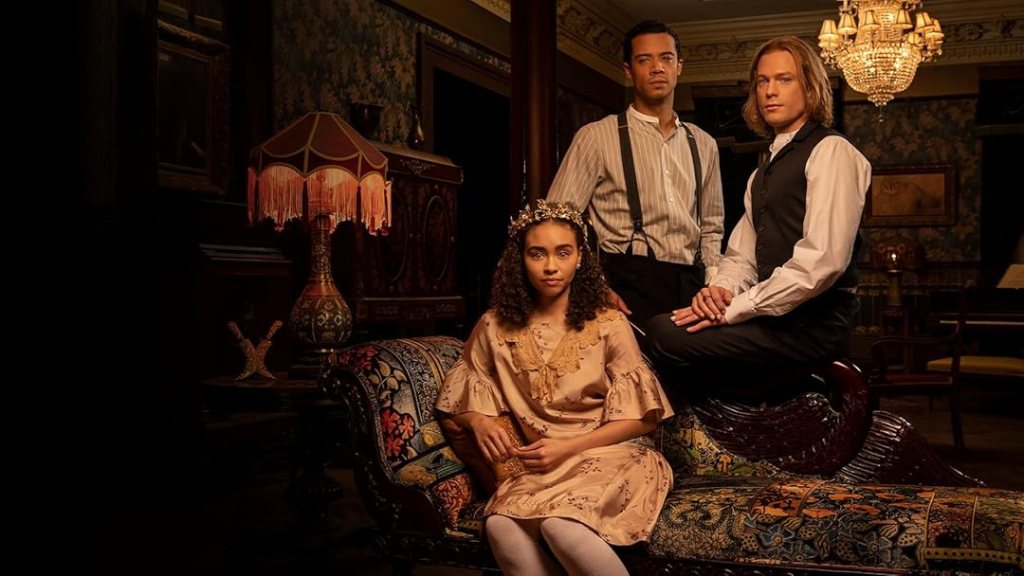
I wasn’t ready for how much Louis and Lestat’s relationship would trigger me. I didn’t know how much Claudia’s reckoning with her own body would send me spiraling into despair and vulnerability. What I drew away from this is the idea of needing to feel loved, to feel like something of importance. At least that’s my takeaway when analyzing the three main characters, Louis, Lestat, and Claudia.
Love is a central theme that is woven throughout the entire season. It’s passionate and raw every time Louis and Lestat are onscreen with each other. Yet, it’s something so ever slightly out of the grasp of Claudia. Each character yearns for love in their own way, which is a sad thought given their affixed natures. Claudia wants to belong and find others like her who will love her in all the ways she missed. Louis yearns for a love that doesn’t exist between him and Lestat. Lestat is both his god and his personal hell on earth. While Lestat yearns for a love that doesn’t shame him for being the monster that he is.
In this show, love is an obsession. It’s something to be possessed rather than felt, because without it, they are truly nothing more than monsters…right?
In this Happy Home
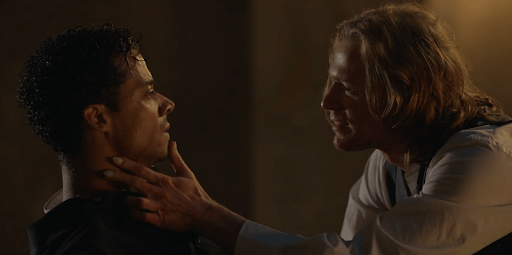
From the start, Louis and Lestat’s relationship skyrockets into forbidden bliss and curses. Louis is unknowingly marked and claimed by Lestat. Only when it is too late does he realize this. Their relationship was something I was initially curious about. Only because, although they were paranormal beings, Louis and Lestat resembled a domestically violent and toxic relationship that we see glorified on the regular.
While there were moments in their relationship that were cute, there was always something uncomfortable that still lingered despite it. And that’s because they were in an incredibly toxic relationship. Both parties loved each other in their own ways, but one was too afraid to admit that the love might not have been in the same way. I think that Louis’s fear of being alone is relatable and gives him slightly more humanity than the rest. But we also understand that Louis cannot see himself outside of Lestat. In toxic relationships, it’s all too common to see a partner lose themselves in their significant other. Oftentimes, it’s to their detriment.
Louis craved Lestat’s presence even though it hurt him sometimes because Lestat was the first being ever to love and actually see Louis in his entirety. That kind of attention, when you’ve never experienced it before in your life, can feel intoxicating. Louis was addicted to Lestat and the way he loved him because he didn’t know he could have better. This is why Claudia makes her entrance.
The Fix-It Baby
Claudia was the love child. The child who would bring mother and father together. They could get over their differences enough to raise her and love each other better. But you and I know that it usually doesn’t work out. She was a child brought into this world not through mutual love, but as a desperate attempt to keep Louis by Lestat’s side. “A bandage for a shitty marriage.”
Claudia is robbed of her agency through this selfish act. She yearns for an adult love and mourns the fact that she will never get it because of the body that she’s stuck in. In a way, we must empathize with Claudia because she was brought into this world without a choice or consideration of how it would affect her.
Her hatred of Lestat feels appropriate because it was he who brought her life, only to show little regard for her. Whether Lestat did love Claudia, I’m not sure. But what I can say is their relationship symbolizes a dynamic relationship that a lot of mothers and daughters have. Constantly questioning, “when will I be enough?” while still being expected to perform to make them happy.
Seriously, I feel for Claudia, even though at times she was reckless. While her mind grows and matures, her body does not. Despite her abilities, she’s still weaker and more subject to harm, inflicted on her by the “adults” who treat her as a child, both human and vampire.
I think what hurts the most is Claudia’s presumed rape scene by the vampire Bruce. While we don’t see or read about the experience from Claudia because of Louis’ guilt, we understand the implications. Her power, yet again, is stolen and taken away from her, only to be mocked by Lestat when she returns back to New Orleans.

Fill the Void
Louis and Claudia each carry a void that they fill in each other. Lestat is the man on the outside, constantly vying for the affections of a man who cannot love him as he is. And I’ll give Lestat this: he did try a little to change in his own way, even though the Antoinette affair should’ve been Louis’ final straw. However, I think when you’re let down by your partner so much, their changes start to feel performative. As if they’re grasping at straws of anything to ensure proximity.
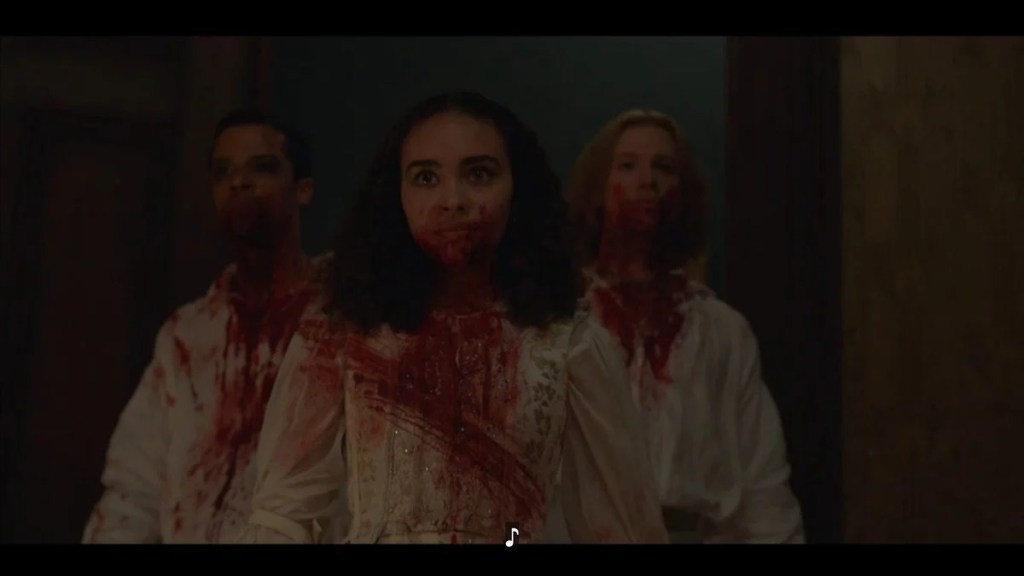
That’s why when Louis and Claudia killed Lestat at the end of the season, it was cathartic. They were finally escaping the toxic abuse and ditching the masks. Claudia’s constant urging of Louis to leave Lestat was a testament to her love for Louis, only for it to be shattered and betrayed when he refused to burn Lestat’s body to be rid of him once and for all.
Claudia knew that Louis loved Lestat more than her, and yet she still hoped to have a place in his heart. Louis’s inability to be present for Claudia is what forces them apart. Love for Louis is a symbol of heartbreak and pain. Lestat’s mistreatment felt too good to let go of, even in death.
The End of the Trifecta
What do we learn from this? That love without consequences hurts. It’s a burden to carry when you’re desperate to be free. Each character loved, but selfishly, in turn causing the doom of their relationships at the expense of others. Whether they were right or wrong doesn’t really matter. The need for love is what keeps them stuck in a never-ending cycle, bound to their suffering. It’s the one human thing that they possess, despite their monstrous identities. Louis, Claudia, and Lestat are relatable in their pursuits of love.
Maybe the real lesson here is that love, like every emotion, is fleeting. And we must enjoy it and nurture it, not cage it, while we have it.


Leave a comment